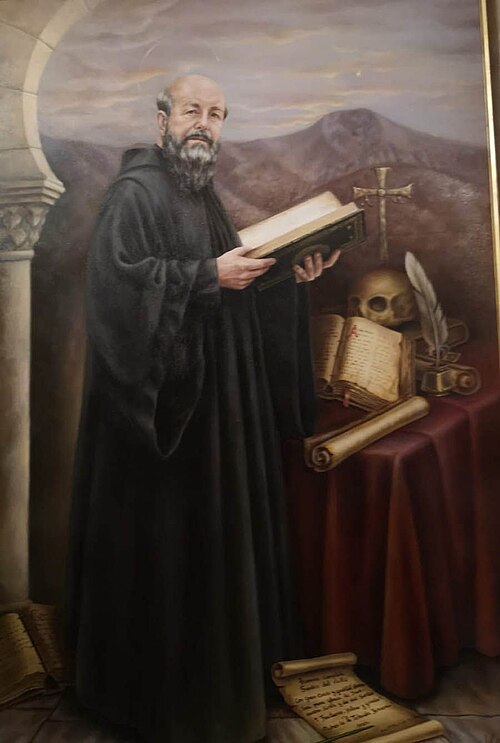
Venerable
Valerius of Bierzo
A holy hermit and writer of Bierzo in Spain, who reposed in 695.
- Feast
- February 25old style March 10
- Reposed
- 6957th century
- Place
- Astorga
- Order
- Venerables
Life
Valerius of Bierzo (in Latin Valerius Bergidensis) was an ascetic, hermit and monk in the Bierzo region of Visigothic Spain, and reposed around the year 695. He was born about 630 near Astorga, into a noble family of northern Visigothic Spain. He received a good education, knew the ancient authors and was a master of Latin.
Probably destined for a career in the king's service, he turned abruptly to God at about twenty and entered the monastery of Compludo, first of the foundations of Saint Fructuosus of Braga in León. He stayed there about a year, then left it and settled in a hermitage in the "desert" near Astorga. After a quarrel with a local priest, well-wishers built him a church on an estate called Ebronanto, where he lived as a hermit in a cell beside the altar, receiving food from the family that owned it. The owner, Ricimer, pulled the church down and built another, apparently meaning to make him a priest. Valerius saw in this a blow of the devil against his secluded life, and he was spared only when the church fell and killed Ricimer. Later he lived in another hermitage with his nephew and a servant, and the three built a small church on the hillside. He refused the priesthood several times and turned away the crowds who came to him. He was connected with the abbey of San Pedro de Montes, for whose monks he wrote; later writers mistakenly thought he had been abbot.
He left poems, accounts of visions of the other world, writings urging asceticism, and three autobiographical works (Ordo querimoniae, Replicatio sermonum, Residuum), in which he tells of the troubles and persecutions he suffered from the local clergy and people and sees them as trials from the devil. He also wrote a Letter in praise of the most blessed Egeria, the pilgrim to the Holy Land. The Life of Saint Fructuosus of Braga, attributed to him from the 16th to the 20th century, is not his. He is commemorated on 25 February.
Commemorated the same day February 25
 Felix III of RomeSaint · Bishop of RomeFeb 25
 Æthelberht of KentRight-Believing · King of KentFeb 25
 WalburgaVenerable · Abbess of HeidenheimFeb 25
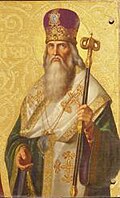 Tarasios of ConstantinopleSaint · Patriarch of ConstantinopleFeb 25
 ConstantinaRight-Believing · Daughter of Constantine the GreatFeb 25
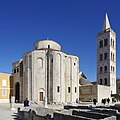 Donatus of ZadarSaint · Bishop of ZadarFeb 25
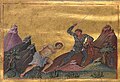 Alexander of RomeMartyr · Roman soldierFeb 25
 Reginos of SkopelosHieromartyr · Bishop of SkopelosFeb 25
 Gennady RebezaVenerable Martyr · Abbot of Bizyukov MonasteryFeb 25
 John LabaVenerable Martyr · MonkFeb 25
 Leo KorobchukHieromartyrFeb 25
- Asclepius of SyriaVenerable · Syrian hermitFeb 25