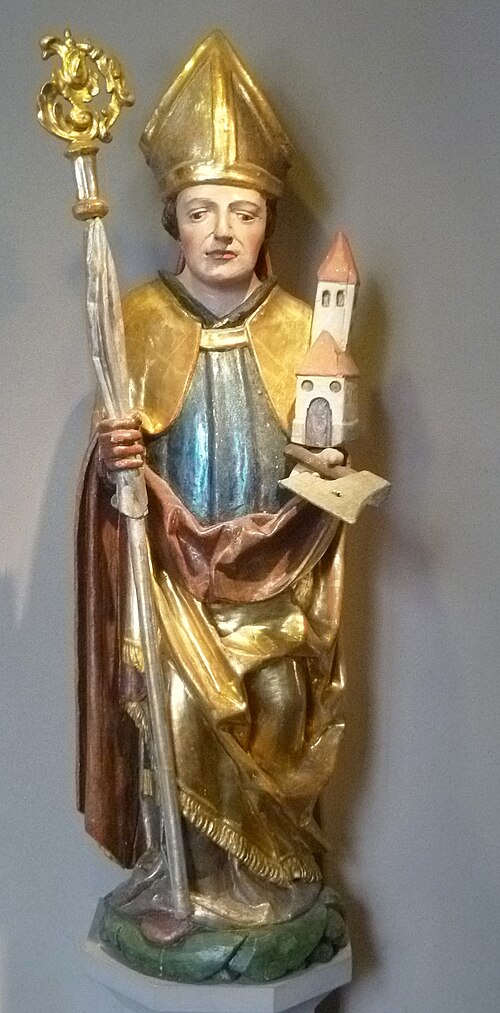
Saint
Wolfgang of Regensburg
Bishop of Regensburg
A monk and later Bishop of Regensburg in Germany, who reposed in 994.
- Feast
- October 31old style November 13
- Reposed
- 99410th century
- Place
- Regensburg
- Order
- Hierarchs
Life
Saint Wolfgang of Regensburg was a monk and then a bishop in tenth-century Germany, teacher of future bishops and of the Emperor Henry II, a great benefactor of the poor and a reformer of monasteries. He was born in Swabia, between 924 and 934 according to various sources, and reposed on 31 October 994.
He came of the family of the counts of Pfullingen. As a child he had a priest as tutor and attended the monastic school of Reichenau, where he became friends with Henry of Babenberg; he followed him to Würzburg, to the cathedral school. When Henry became Archbishop of Trier in 956, he called Wolfgang, who taught at the cathedral school and worked for the reform of the archdiocese despite opposition. At Trier he came to know the great reform monastery of Saint Maximin. After the archbishop's death in 964 he became a monk at Einsiedeln in Switzerland and was ordained priest by Saint Ulrich (968 according to one source, 971 according to another). At the request of Ulrich and of the Emperor Otto the Great he was sent to preach to the Magyars, who had settled in ancient Pannonia.
At Christmas 972 Bishop Piligrim of Passau obtained for him the see of Regensburg. As bishop he was the teacher of the future emperor Saint Henry II, of Poppo, future Archbishop of Trier, and of Tagino of Magdeburg. He reformed the abbey of Saint Emmeram by giving it abbots of its own again (in 975 the monk Ramuold from Trier), supported the reform of Gorze, set in order the convents of Obermünster and Niedermünster, founded in 983 the convent of Saint Paul (Mittelmünster) and helped renew the abbey of Niederaltaich. He generously accepted that his diocese be reduced for the benefit of the new diocese of Prague (975). He was also an adviser to the emperors, accompanied Otto II on the campaign to Paris in 978 and took part in the diet of Verona in 983. He was a great benefactor of the poor.
In 976 he spent a year at Mondsee, and from there he withdrew as a hermit to a solitary place by the lake that now bears his name, the Wolfgangsee, in Upper Austria. After his death many churches chose him as their patron, and several towns bear his name. He is counted among the three great German saints of the tenth century, with Ulrich of Augsburg and Conrad of Constance. He is a saint of the undivided Church and is commemorated on 31 October (New Calendar).
Commemorated the same day October 31
 StachysApostle · Bishop of ByzantiumOct 31
 Serapion of AntiochSaint · Patriarch of AntiochOct 31
 Quentin of AmiensMartyrOct 31
- Urban of MacedoniaApostle · Bishop of MacedoniaOct 31
 Hundred Thousand Martyrs of TbilisiHoly MartyrsOct 31
 Narcissus of AthensApostle · Apostle of the SeventyOct 31
 John KochurovHieromartyr · Archpriest at Tsarskoye SeloOct 31
 Epimachus of PelusiumMartyr · Martyr of EgyptOct 31
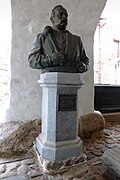 Peter KalnishevskyConfessor · Last Koshovy Otaman of the Zaporozhian SichOct 31
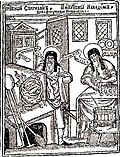 Spyridon the Prosphora-bakerVenerable · Prosphora-baker of the Kiev CavesOct 31
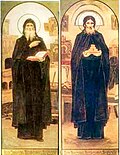 Nicodemus of the Kiev CavesVenerable · Prosphora-baker of the Kiev CavesOct 31
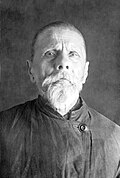 Basil ArkhangelskyHieromartyr · ArchpriestOct 31