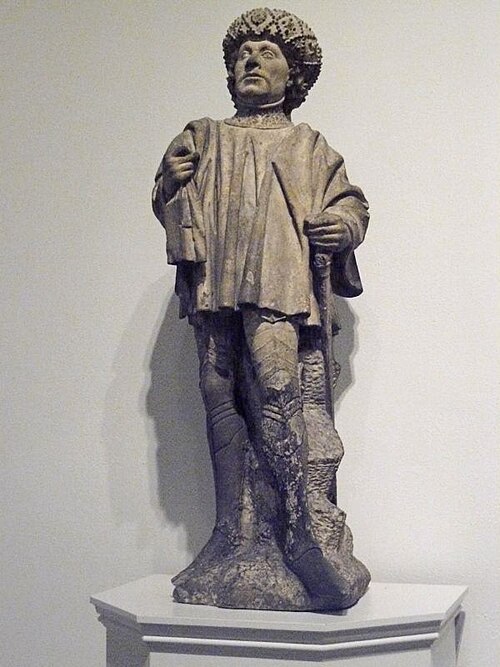
Venerable
Bavo of Ghent
Missionary in Flanders
Converted from a dissolute life, he became a missionary under the guidance of St. Amand.
- Feast
- October 1old style October 14
- Reposed
- 6547th century
- Place
- Ghent
- Order
- Venerables
Life
Saint Bavo of Ghent, venerable, was a missionary in Flanders, who exchanged a life of dissipation for a monk’s life, under the guidance of Saint Amand. He is commemorated on 1 October.
Youth
Bavo was born near Liège, in a Frankish noble family, which gave him the name Allowin. According to some sources he was the son of Pepin of Landen and Saint Itta, and his sisters were Saints Begga and Gertrude. He was a wild young aristocrat of Brabant; as a soldier he led an undisciplined life. Through marriage he made a useful alliance and had a daughter. According to some accounts he sold his servants as slaves and lived in debauchery.
His conversion
Soon after the death of his wife, he decided to reform, hearing a sermon of Saint Amand on the emptiness of material things. Returning home, he distributed his wealth to the poor and received the tonsure from Amand. For some time he accompanied Amand on his missionary journeys through France and Flanders, taking the name Bavo. Once he met a man he had earlier sold as a slave and, to atone for the deed, had him lead him in chains to the town jail. He built an abbey on his lands and became a monk. He distributed his goods to the poor and lived as a recluse, first in a hollow tree, then in a cell in the forest beside the abbey. He died at Ghent, around 654-659.
Veneration
His relics were placed in the abbey at Ghent. He is patron of the towns of Ghent, Zellik and Lauwe in Belgium and of the city of Haarlem in the Netherlands. In art he is shown as a knight with a sword and a falcon; sometimes he holds a purse of money, because in medieval Ghent taxes were collected on his day, 1 October. Rembrandt painted a Saint Bavo. He is venerated by both the Catholic and the Orthodox Church.
Commemorated the same day October 1
 Romanos the MelodistVenerable · The HymnographerOct 1
 Ananias of DamascusApostle · Apostle of the SeventyOct 1
 Mirian III of IberiaEqual-to-the-Apostles · King of IberiaOct 1
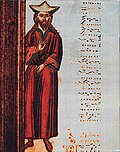 John KoukouzelesVenerable · Composer and reformer of chantOct 1
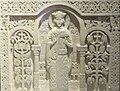 Nana of IberiaEqual-to-the-Apostles · Queen of IberiaOct 1
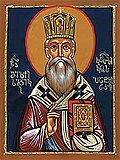 Melchizedek I of GeorgiaSaint · Catholicos-Patriarch of GeorgiaOct 1
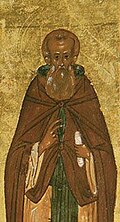 Savva of VisheraVenerable · Founder of Savvo-Vishersky MonasteryOct 1
 Gabriel Bănulescu-BodoniSaint · Metropolitan of ChișinăuOct 1
 Michael NovoselovNew Martyr · Publicist and spiritual writerOct 1
- Alexis StavrovskyHieromartyr · PriestOct 1
- SidoniaSaintOct 1
- AbaiMartyrOct 1