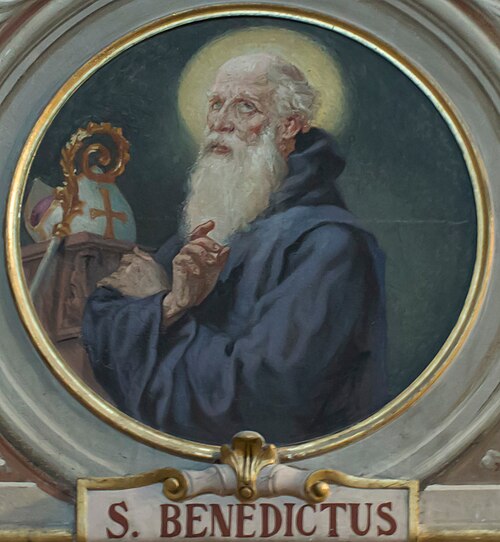
Saint
Benedict of Milan
Archbishop of Milan
Archbishop of Milan from about 685 to 732.
Life
Saint Benedict was archbishop of Milan at the end of the seventh century and in the first decades of the next, until his death in March 732 (in some sources 725). He is honoured in the Orthodox and the Catholic Church and is remembered on 11 March.
Little is known of his life. A late tradition without historical basis ties him to the Milanese family of the Crespi, hence the name Benedict Crispus; according to another view he came from L'Aquila and belonged to the Crispomonti family. His pastorate lasted, according to some chronicles, forty-five years. He wrote the epitaph of Caedwalla, king of Wessex, buried in Saint Peter's Basilica in Rome.
In the time of Pope Constantine he went to Rome and opposed the claim of Armentarius, bishop of Pavia, that Pavia was directly subject to Rome. Benedict reminded the pope that Pavia had from the beginning been under the metropolitan see of Milan and that its bishop was consecrated by the bishop of Milan. The pope nevertheless ruled in favour of Armentarius, perhaps because of an older privilege or because Pavia was the capital of the Lombard kingdom.
He built a church and a monastery in Milan, of which nothing remains. He probably had a part in calming the Schism of the Three Chapters. Paul the Deacon, some fifty years after his death, remembers him as a saint venerated throughout Italy. He died between 9 and 11 March 732, and a poem written about ten years after his death praises his deeds and says that he was buried in the basilica of Sant'Ambrogio. The Orthodox Church and the Roman rite keep his feast on 11 March, the Ambrosian rite on 6 September.
Commemorated the same day March 11
 Sophronius of JerusalemSaint · Patriarch of JerusalemMar 11
 Sophronius of VratsaSaint · Bishop of VratsaMar 11
 Theodora of ArtaRight-Believing · Consort of the ruler of EpirusMar 11
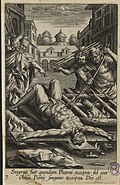 Pionius of SmyrnaHieromartyr · Presbyter of SmyrnaMar 11
- John MoschusVenerable · Author of the Spiritual MeadowMar 11
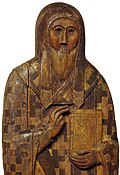 Euthymius II of NovgorodSaint · Archbishop of NovgorodMar 11
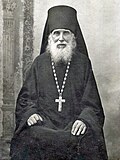 Alexis of GoloseevoVenerable · Monk of the Kiev Caves LavraMar 11
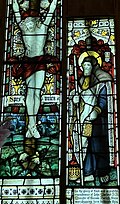 Constantine of StrathclydeRight-Believing · King of StrathclydeMar 11
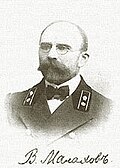 Basil MalakhovConfessor · ArchpriestMar 11
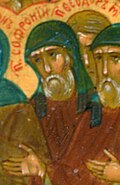 SophroniusVenerableMar 11
- Agape of AntiochMartyrMar 11
- Alberta of AgenMartyrMar 11