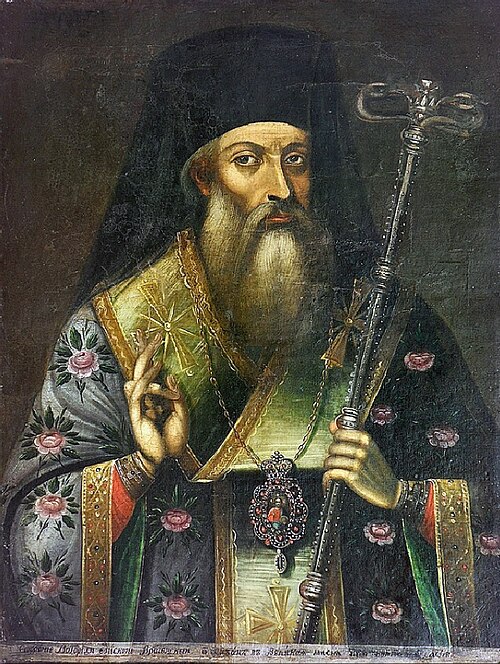
Saint
Sophronius of Vratsa
Bishop of Vratsa
Bulgarian cleric, bishop of Vratsa, a leading figure of the Bulgarian National Revival, who died in 1813.
Life
Saint Sophronius of Vratsa, in the world Stoyko Vladislavov, was bishop of Vratsa, a writer and one of the leading figures of the early Bulgarian National Revival. He died at Bucharest in 1813 (the date is unknown; his last document is of 2 August 1813). He was canonised by the Bulgarian Orthodox Church on 31 December 1964.
He was born in 1739 in the town of Kotel in eastern Bulgaria, to the family of a cattle trader. His father died of plague in Istanbul in 1750, and his mother, Maria, when he was three. He attended the school of the monastery in his hometown and studied Slavic and Greek books. He worked as a weaver, but loved holy things and was ordained priest in 1762; he was also a teacher and a writer. In 1765 he met at Kotel Paisius of Hilendar, who showed him the Slavonic-Bulgarian History, the principal work of the Bulgarian Revival, of which he made the first copy, known as Sophronius's Copy. He went to Mount Athos between 1770 and 1775, left Kotel in 1792, served in the parish of Karnobat and went to the monastery at Arbanasi, and on 17 September 1794 was consecrated bishop of Vratsa, under the name Sophronius. He also had troubles with the authorities, was accused and tortured, but was released after paying. As bishop he took part in public life and, according to some sources, initiated the sending of a delegation of the people of Vratsa to Moscow. He had close ties with the Phanariote circles.
After the disturbances of 1797 caused by Osman Pazvantoğlu, the bishop's office became ever harder for him, and he left Vratsa and wandered through north-western Bulgaria. He spent three years at Vidin, a time that helped him define his aims as a writer. In 1803 he left for Bucharest, to serve the people as a high cleric, being released, at his request, from the bishop's seat but continuing to sign with the name of bishop. Between 1806 and 1812 he was one of the most eminent representatives of the Bulgarians in dealings with the Russian command in the Russo-Turkish war, urging the Bulgarians to help the Russians. He spent his last years in a monastery in Bucharest.
He wrote his best works at Bucharest. Among them is Nedelnik (Sunday Book, 1806), his only printed work and the first printed book in modern Bulgarian, a collection of teachings and sermons for every holiday of the year, from Greek and Slavic sources; the book has historical importance in the beginning of printing in modern Bulgarian and in establishing the spoken language as a literary language. He also wrote a collection, the Sunday Gospel Interpretation (1805), a very popular autobiography, Life and Sufferings of Sinful Sophronius, and an appeal to the Bulgarian people. His wife, Ganka, bore him four children: Tsonko, Vladislav, Maria and Ganka; from his son Tsonko descend, among others, Prince Stefan Bogoridi and his line. His feast is on 11 March.
Commemorated the same day March 11
 Sophronius of JerusalemSaint · Patriarch of JerusalemMar 11
 Theodora of ArtaRight-Believing · Consort of the ruler of EpirusMar 11
 Pionius of SmyrnaHieromartyr · Presbyter of SmyrnaMar 11
- John MoschusVenerable · Author of the Spiritual MeadowMar 11
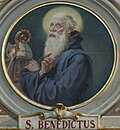 Benedict of MilanSaint · Archbishop of MilanMar 11
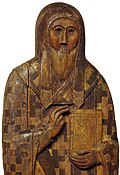 Euthymius II of NovgorodSaint · Archbishop of NovgorodMar 11
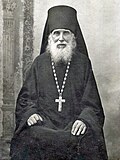 Alexis of GoloseevoVenerable · Monk of the Kiev Caves LavraMar 11
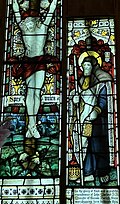 Constantine of StrathclydeRight-Believing · King of StrathclydeMar 11
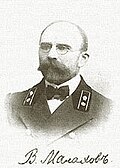 Basil MalakhovConfessor · ArchpriestMar 11
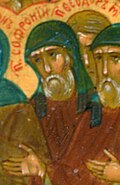 SophroniusVenerableMar 11
- Agape of AntiochMartyrMar 11
- Alberta of AgenMartyrMar 11