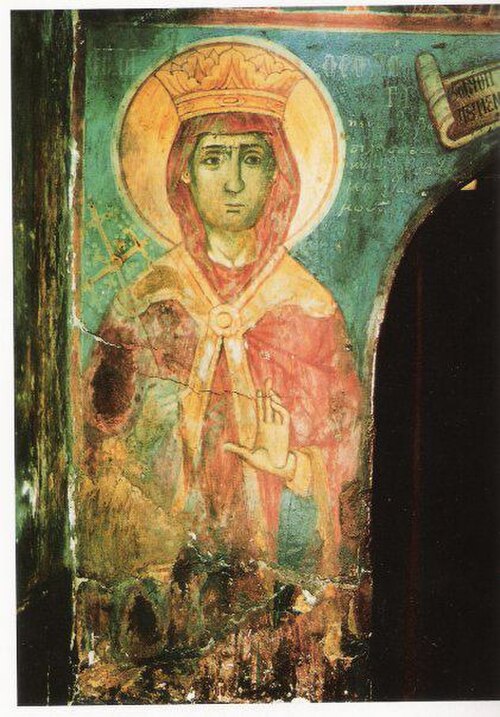
Right-Believing
Theodora of Arta
Consort of the ruler of Epirus
Consort of the ruler of Epirus, venerated as a saint in the Orthodox Church, who lived in the thirteenth century.
- Feast
- March 11old style March 24
- Reposed
- 128013th century
- Place
- Arta
Life
The Holy Right-Believing Theodora of Arta (Theodora Petraliphaina) was the wife of the despot of Epirus, Michael II Komnenos Doukas, and is venerated as a saint in the Orthodox Church, protector of the city of Arta. She lived in the thirteenth century and fell asleep after 1270 (in some sources, around 1280). Her feast is on 11 March.
Family and marriage
Her life is known mostly from a short life written by the monk Job, sometimes thought the same as the cleric Job Iasites of the late thirteenth century; because of many errors of chronology and descent, the identification is doubtful. Theodora was born between 1210 and 1216 at Servia (in other sources, at Thessalonica), the daughter of the sebastokrator John Petraliphas, governor of Thessaly and Macedonia, and of Helena, of an aristocratic family of Constantinople. The Petraliphas family was of Norman origin, entered the service of Byzantium and rewarded with high ranks. After her father's death Theodora came under the protection of the despot of Epirus, Theodore Komnenos Doukas. After his defeat at Klokotnitsa (1230), power passed to his illegitimate nephew, Michael II, who, passing through Servia, was struck by her beauty and, it is said, to extend his power, married her at once after becoming despot, in 1231, though she was still a child.
Exile and patience
Theodora, a sensitive nature devoted to God, could not follow her husband's worldly way of life and became more and more a model of a humble and merciful princess. Michael abandoned her, though she was pregnant with the future heir, Nikephoros, and began to live with mistresses, among them a lady of Arta, Gangrene, whom he brought into the palace. Theodora bore poverty without complaint, sheltered by a priest of the village of Prinista. The exile lasted five years (in some sources, six); then Michael repented and called her back, and they lived together from then on.
As consort of the ruler of Epirus, Theodora urged, it is said, closer ties with the old rival of Epirus in the inheritance of the Byzantine empire, the Empire of Nicaea. The contemporary historian George Akropolites mentions her accompanying her son Nikephoros to his betrothal and then to his wedding with Maria, daughter of the emperor Theodore II Laskaris. The rapprochement brought a settlement of the ecclesiastical disputes between the two states and the title of despot for Michael, but did not last long.
Foundations and veneration
Theodora founded the convent of Saint George in the capital of Epirus, Arta, where she retired after Michael's death and where she was buried; the church was later named for Saint Theodora, and her tomb became a place of pilgrimage, since many miracles are attributed to it. They had six children: Nikephoros I, who succeeded to the throne, John, Demetrios (called Michael Koutroules), Helena, married to Manfred of Sicily, Anna, married first to William II of Villehardouin, then to Nicholas II of Saint-Omer, and Helena Angelina Doukaina.
Commemorated the same day March 11
 Sophronius of JerusalemSaint · Patriarch of JerusalemMar 11
 Sophronius of VratsaSaint · Bishop of VratsaMar 11
 Pionius of SmyrnaHieromartyr · Presbyter of SmyrnaMar 11
- John MoschusVenerable · Author of the Spiritual MeadowMar 11
 Benedict of MilanSaint · Archbishop of MilanMar 11
 Euthymius II of NovgorodSaint · Archbishop of NovgorodMar 11
 Alexis of GoloseevoVenerable · Monk of the Kiev Caves LavraMar 11
 Constantine of StrathclydeRight-Believing · King of StrathclydeMar 11
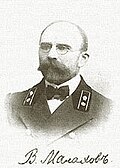 Basil MalakhovConfessor · ArchpriestMar 11
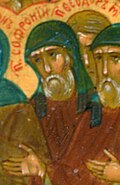 SophroniusVenerableMar 11
- Agape of AntiochMartyrMar 11
- Alberta of AgenMartyrMar 11