Confessor
Constantine Razumov
A confessor of the Christian faith in a time of persecution.
- Feast
- July 31old style August 13
- Born
- 1869
- Order
- Confessors
Life
Holy Confessor Constantine Razumov, a priest (1869 - after 1937), was a priest of the Dormition monastery in Kineshma, arrested several times for his influence on believers. His full name was Constantine Vasilievich Razumov.
He was born in 1869 in the village of Golovinskoe, Buy district, Kostroma province. From 1890 to 1895 he was a psalm-reader, in 1895 he was ordained deacon, and in 1904 priest at the Dormition monastery in Kineshma, where he served until the monastery was closed in 1924; after that he served at the cathedral of Kineshma. In the twenties the OGPU arrested him several times. At the arrest of 1929 the investigator asked why he had been arrested before. Father Constantine answered that the reason was that he had authority among believers, who honoured and loved him, and that he was also known outside the Kineshma district. As priest of the monastery he had been the spiritual father of many pilgrims. He firmly rejected the charge of leading illegal women's circles. He said that he had visited the homes of workers of the "Demyan Bedny" factory, but as his own parishioners, that he had served in a prayer house in the village of Tsibikha, but that it was registered, that he had not visited Bishop Nicholas Golubev nor corresponded with him, and that he was subject to Metropolitan Sergius. He was sentenced then to three years of exile in the Northern Region.
Returning to Kineshma in 1933, he lived in the house of some parishioners, in a room made into a chapel, and there he served in secret. From time to time he visited his spiritual children in Vichuga and near Palekh, and the NKVD learned of these visits. At the beginning of December 1935 the head of the NKVD in Palekh wrote to Ivanovo that the priest Razumov appeared among churchmen and asked for measures to find his residence. On 20 February 1936 the priest Constantine Razumov was arrested, together with the priest John Rumyantsev, Elizabeth Rumyantseva, Anna Serova and others, seven persons in all. They were taken to the Kineshma prison, where once stood the monastery in which Father Constantine had served; he found there, after years of service in a holy place, "the abomination of desolation".
At the interrogations he said that he had visited Evpraksia Kudryasheva and Evdokia Rumyantseva in the Vichuga region, whom he had known since 1919 from the Kineshma monastery, that he had stayed with them overnight, that in Palekh he had stayed with Nicholas Ryabinin for rest, that in Shuya in 1934 he had been with the protodeacon Leonid Rozov, then in exile, with whom he corresponded, and that he did not consider any of them anti-Soviet. The investigator accused him of leading the church movement of the "True Orthodox Church", born on the platform of the exiled Bishop Basil, and of anti-Soviet agitation. He answered that he did not consider himself guilty. Of the notebook of poems and sermons, and of the brochures and akathists found in the search, he said only that they were for personal use. Father John Rumyantsev and the women held as firmly.
On 15 July 1937 Father Constantine Razumov and Elizabeth Rumyantseva were sentenced to five years of exile in Kazakhstan, and Father John Rumyantsev and Anna Serova to five years in a camp. Father Constantine died soon in exile. He is commemorated on 7 February, with the Synaxis of the New Martyrs and Confessors of Russia, on 20 June, with the Synaxis of the Saints of the Ivanovo Metropolis, and on 13 August, in the new style.
Commemorated the same day July 31
 Joseph of ArimatheaRighteous · Disciple of the LordJul 31
 Germanus of AuxerreSaint · Bishop of AuxerreJul 31
 John the ExarchSaint · Bulgarian scholarJul 31
 Benjamin of PetrogradHieromartyr · Metropolitan of PetrogradJul 31
 Calimerius of MilanSaint · Bishop of MilanJul 31
 Neot of CornwallVenerable · Hermit in CornwallJul 31
 George NovitskyMartyr · Professor of lawJul 31
 John KovsharovMartyr · Lawyer of Alexander Nevsky LavraJul 31
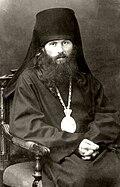 Basil of KineshmaConfessor · Bishop of KineshmaJul 31
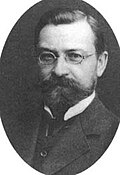 Sergius SheinHieromartyr · Archimandrite and former Duma deputyJul 31
- Arsen of NinotsmindaVenerable · Georgian bishop and calligrapherJul 31
- Anna SerovaMartyrJul 31