Hieromartyr
Ignatius Sadkovsky
Priest of Skopin
A hieromartyr of the Skopin region, commemorated in the Russian Church calendar.
- Feast
- January 28old style February 10
- Reposed
- 193820th century
- Order
- Martyrs
Life
Holy Hieromartyr Ignatius Sadkovsky, bishop of Skopin, was born on 21 October 1887 in Moscow, in the family of the priest Sergius Maximovich Sadkovsky, and at baptism, like his father, was named Sergius. He was bishop of Belev, then of Skopin, spent many years in prisons and camps and reposed in a camp on 9 February 1938.
Youth and monasticism
In 1907 Sergius finished the Moscow theological seminary and entered the Theological Academy, where he zealously studied the writings of Saint Ignatius (Brianchaninov). The study of these works, frequent visits to the Zosima Hermitage, the upbringing in a pious family and his own longing for the honour of the monastic calling led him to resolve to receive monasticism. On 11 December 1910 he was tonsured into the mantle with the name Ignatius. The hieromonk who performed the tonsure wrote him afterward an instruction which he kept in his heart all his life: on the unceasing Jesus Prayer, as the monk's first work, on humility and self-reproach, so as always to see himself a sinner and to judge no one, and on obedience.
On 23 January 1911 he was ordained hierodeacon. That same year he completed the Academy with the degree of candidate of theology, for the work In Search of the Living God. Bishop Ignatius (Brianchaninov) and his Ascetic View of the World. The rector of the Academy, Bishop Theodore (Pozdeevsky), praised in his review the recreation of the living spiritual image of the holy hierarch. On 31 July 1911 he was ordained hieromonk; being ill, he could not go to the Tomsk seminary to which he had been assigned, and remained assistant librarian. In 1917 he entered the Smolensk Zosima Hermitage, under the guidance of Hieroschemamonk Alexis (Solovyov), and on 13 January 1918 he entered the brotherhood of the Danilov monastery in Moscow, as confessor of the brethren and tomb hieromonk at the relics of the Holy Right-Believing Prince Daniel of Moscow.
Bishop of Belev
On 5 April 1920, raised to the rank of archimandrite, he was ordained bishop of Belev, vicar of the Tula diocese. In his word to Patriarch Tikhon he said that he was seized with trembling at the thought that he must save not himself alone but others, and asked them to pray for him. For two years he devoted himself to the good order of church life in the vicariate, settling among other things a conflict in a convent.
In 1922 the Renovationists, who had removed Patriarch Tikhon for a time from governing the Church, seized the diocesan administrations. Bishop Vitaly (Vvedensky), elected at Tula in June 1922, went over to them, and Bishop Ignatius was forced to go to Belev, whence he governed the diocese, canonically subject to Patriarch Tikhon. At the congress of the clergy and laity of the district on 16 September 1922, despite the efforts of the Renovationists' envoy, Renovationism was condemned as heretical, and in its place the Orthodox Transfiguration community of Belev was founded, subject to Bishop Ignatius. In the epistle he sent the next day, he showed that the Living Church had separated from the one Church of Christ and that the orders of the diocesan administration of Tula, which had entered into relation with it, must be regarded as void. The Renovationists began a merciless struggle against him: on 31 October they sent him into retirement, with residence at Sarov, and he said that at Sarov was the same earth as here and all must go into the earth. On 1 December 1922 he answered that he would not give up serving and would not commemorate the leaders of Renovationism.
Years in the camps and martyrdom
In January 1923 he was arrested, together with his brother, Hieromonk George, vicar of the Transfiguration monastery. Ill with pleurisy on a tubercular basis, he was moved to Tula, then to Taganka, and on 14 September 1923 sent to the Solovki camp. Released in 1926, he returned to the see of Belev and refused to receive the Renovationists, saying he did not wish to talk with the non-Orthodox. Their denunciations led to new arrests, of two months each, at the end of 1926 and in 1927. On 26 December 1929 he was arrested again, with Father George, and on 2 July 1930 sentenced to three years in a camp; he was held in the Ust-Vym camp near Kotlas. Released on 2 June 1932, he returned to Tula, and at the beginning of 1933 Metropolitan Sergius appointed him bishop of Skopin, vicar of the Ryazan diocese, where the ruling bishop was Archbishop Juvenal (Maslovsky), with whom the bishop had shared some years of the Solovki camp. An arrest in 1935, for drawing a young man into taking part in the service, was overturned on his complaint.
On 3 February 1936 he was arrested with some of the clergy and laity of Skopin and imprisoned at Butyrka. The investigators accused him of creating a counter-revolutionary organisation and of appointing as priests those freed from the camps. The bishop said that he had appointed those returned from the camps at their request, because he had no right to refuse them appointment, any more than others, since they had the proper documents. On 16 March 1936 he was sentenced to five years of exile in the Northern Region and sent to Arkhangelsk. On 3 August 1937 he was arrested again in exile, and on 15 October 1937 sentenced to ten years in a labour camp. The exiles, prisons, interrogations and forced labour finally undermined his health. Bishop Ignatius reposed in Kuloilag in the Arkhangelsk region on 9 February 1938 and was buried in an unknown grave in the camp.
He is commemorated on 10 February, on 7 February, in the Synaxis of the New Martyrs and Confessors of the Russian Church, on 23 June, in the Synaxis of the Saints of Ryazan, on 23 August, in the Synaxis of the New Martyrs and Confessors of Solovki, on 5 September, in the Synaxis of the Saints of Moscow, on 5 October, in the Synaxis of the Saints of Tula, on 1 November, in the Synaxis of the Saints of the Arkhangelsk Metropolis, and on 10 December, in the Synaxis of the New Martyrs and Confessors of Radonezh (new style, some days movable).
Commemorated the same day January 28
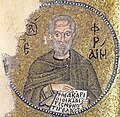 Ephrem the SyrianVenerable · Deacon of EdessaJan 28
 Isaac the SyrianVenerable · Bishop of NinevehJan 28
 Ephraim of PereyaslavlVenerable · Bishop of PereyaslavlJan 28
 Ephraim of NovotorzhokVenerable · Founder of the Boris and Gleb MonasteryJan 28
 Leontius StasievichConfessor · ArchimandriteJan 28
 Emilianus of TreviHieromartyr · Bishop of TreviJan 28
 Theodosius of TotmaVenerable · Monk of Sumorin MonasteryJan 28
 Elias BenemanskyHieromartyr · Priest of TverJan 28
- Palladius of AntiochVenerable · Hermit near AntiochJan 28
- Olga EvdokimovaNew MartyrJan 28
- Vladimir PishchulinHieromartyr · HieromonkJan 28
- Aedhlugh of Eridh CassainSaintJan 28