Saint
Melo
A holy woman commemorated in the Greek synaxarion.
- Feast
- July 4old style July 17
- Era
- 15th century
Life
Venerable Melo is the only holy woman of the island of Kos who appears to have been native to it, although her origin is not known. Her small old church, called the "little monastery" of Saint Melo, stands south-west of the Asklepieion, about 150 metres west of the hot springs at Kokkinonero.
Despite the lack of historical detail, her memory has been kept alive among the people without interruption. Because the origin of her name is uncertain, some doubted that she really existed, but her historicity was confirmed in 1972 and 1973 by the publication of a manuscript from the end of the fifteenth century (Paris codex 1362) containing hymns written in her honour. Iakovos Zarraftis records that in the year 1018 an ascetic built a monastery near her church and lived there healing the faithful who came to him and directing them to the healing waters; the ruins of his cell can still be seen about fifty metres above the little church. Foreign archaeologists who visited in 1933 thought the church might date from the early Christian centuries.
The little we know of her life comes from the hymns of Metropolitan Mitrophanes, who held the see of Rhodes in the time of the Knights and had Kos in his care. From them we learn that before leaving the world the saint gave her possessions to the needy and withdrew to a mountain place called Vourrina, where, lacking even necessities, she gave herself to ascetic struggle. In the cold of the height she wore down her body and her passions. The metropolitan compares her to the pelican of the desert, who leaves the crowd to commune with God. Out of deep humility she fell asleep among the rocks, and the place became a pilgrimage site, so that a church was built there in her name. Over its door is a date reading July 1483, and traces of frescoes survive inside.
The saint often appears to the people of Kos near her church, among roses. The Metropolis of Kos and Nisyros has appointed her feast for the first Saturday of July each year, that is, between 1 and 7 July (new style).
Commemorated the same day July 4
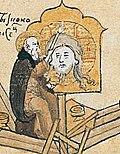 Andrei RublevVenerable · The IconographerJul 4
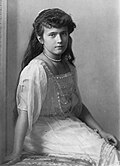 AnastasiaPassion-Bearer · Grand Duchess of RussiaJul 4
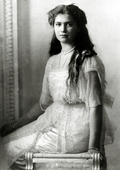 MariaPassion-Bearer · Grand Duchess of RussiaJul 4
 OlgaPassion-Bearer · Grand Duchess of RussiaJul 4
 TatianaPassion-Bearer · Grand Duchess of RussiaJul 4
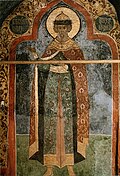 Andrei BogolyubskyRight-Believing · Grand Prince of VladimirJul 4
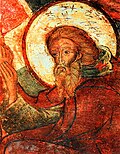 Andrew of CreteSaint · Archbishop of CreteJul 4
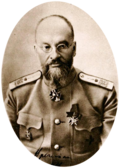 Eugene BotkinPassion-Bearer · Physician of the imperial familyJul 4
 Michael ChoniatesSaint · Metropolitan of AthensJul 4
 Anastasia of KievVenerable · Grand Duchess, later a nunJul 4
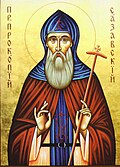 Procopius of SázavaVenerable · Abbot of Sázava MonasteryJul 4
 Sava of Gornji KarlovacHieromartyr · Bishop of Gornji KarlovacJul 4