Venerable Martyr
Philaret Pryakhin
A Russian monk who died a martyr for his faith in Christ during the communist persecution.
Life
Holy Venerable Martyr Philaret Pryakhin, an abbot, was born on 29 August 1880 in the village of Chulkovo in the Pronsk district of the Ryazan province, in the family of the peasant Trofim Pryakhin, and at baptism received the name John. He died in a camp on 7 March 1942, after being persecuted for his faith and for the believers who gathered around him.
The monk of Pronsk
He learned his letters at home and at seventeen, with a burning wish to serve Christ and His holy Church, he entered the Spassky Hermitage near the town of Pronsk, where, besides the household obediences, he had the obedience at the choir. On 21 April 1913 he was tonsured a monk with the name Philaret, on 18 August of the same year he was ordained hierodeacon, and on 16 November 1914 hieromonk.
The chief holy treasure of the hermitage was a copy of the wonderworking icon of the Mother of God, Helper of Sinners, with which the brethren went in processions through the neighbouring villages. With them Hieromonk Philaret went in the processions and served supplicatory services. After the godless closed the hermitage in 1919, Father Philaret carried the icon to the church in the village of Sreznevo in the Shilov district of the Ryazan region, where he began to serve. Archbishop Benjamin Muratovsky of Ryazan and Zarajsk blessed him to resume the monastery's custom of going with the icon through the villages, and on 29 May (11 June) the celebration of the icon was set in the parish. On that day up to eight thousand worshippers and up to twenty priests came to the village. In 1926 Father Philaret was raised to the rank of abbot.
Arrest and the camp
In July 1930 the Ryazan section of the OGPU reported to its leadership in Moscow that in the village of Sreznevo, on 11 June, on the feast of the church, there had been a great influx of worshippers, some eight thousand, and that this was explained by the fact that in the village there served a certain Philaret, who had a wonderworking icon, held daily supplicatory services and other services in which several priests, monks and nuns took part. The report added that during collectivization the pilgrimage of peasants from the surrounding villages, above all women, had been particularly large and that after meeting Philaret they did not join the collective farm, and those who had joined quickly withdrew. Urgent measures were taken to paralyse his activity.
Father Philaret saw that the authorities were watching him and, knowing that arrests of clergy, monks and laity were going on everywhere, he warned those who came to the church to pray that the time of his imprisonment was drawing near. He himself had long been ready and always kept a small bag of linen hanging on the wall. On 31 May 1931 he was arrested. To the investigator's questions he said that he had been twenty years in the Spassky monastery, that the murder of Tsar Nicholas II had shaken the monastery, that in 1919 the monastery had been scattered, its property plundered and various institutions put into its buildings, that all the monks and novices had dispersed and lived near churches, in the watchmen's huts, remaining faithful followers of Christ. He added that he was an enemy of the Soviet power, because it was always against the Orthodox Church and religion. On 12 November 1931 the OGPU Collegium sentenced him to five years in a concentration camp, and he was sent to the construction of the White Sea-Baltic Canal.
The last years
At the end of the term, in 1936, Father Philaret returned to Ryazan and went to Archbishop Juvenal Maslovsky, who advised him to leave the city, where he might be arrested again, and to go to Tver, where, as a newcomer, he would be less noticed and calmer. At Tver he got to know a priest of an Edinoverie church, who found him lodgings where he lived about two years, and then he moved to a distant relative in the village of Trubino. While he lived at Tver, he went to the church of the icon of the Mother of God of the Burning Bush, where Archbishop Thaddeus Uspensky served, and after his arrest to the last church left open in the city, at the Volynsky cemetery, where Bishop Palladius Sherstennikov served. In 1938 Bishop Palladius offered him a priest's place in the village of Konakovo, but the authorities there refused him registration, and he returned to Trubino.
In August 1939 NKVD men made arrests in Tver and arrested Bishop Palladius also. On 28 August, when Father Philaret came to church for the feast of the Dormition of the Mother of God, a deacon told him that NKVD men had come to arrest him and advised him to flee at once. Together with the relative with whom he lived, he left the town through a copse for Trubino, but that very evening he was arrested and taken to the prison at Tver. The interrogations lasted three months. At all of them Father Philaret categorically refused to admit guilt. Then the investigators presented him with extracts from the testimony of Bishop Palladius, who, cooperating closely with them, had agreed to sign false statements and to assert at a confrontation that Abbot Philaret was a member of an anti-Soviet monarchist group. Asked what he admitted guilt in, he answered that he had said anti-Soviet accusations to Bishop Palladius, accusing the Soviet power of oppressing religion and persecuting the clergy and calling it the power of the antichrist, but that he had never belonged to an anti-Soviet group and did not admit guilt in that.
On 4 March 1940 the Special Council of the NKVD sentenced Father Philaret to three years in a labour camp. Abbot Philaret Pryakhin died on 7 March 1942 in the Novo-Ivanovsk section of the Mariinsk camp in the Kemerovo region and was buried in an unknown place. He is commemorated on 23 June. The year of his canonization is not given.
Commemorated the same day June 10
 Etheldreda of ElyVenerable · Abbess of ElyJun 10
 Olivia of PalermoMartyrJun 10
 John of TobolskSaint · Metropolitan of TobolskJun 10
 Maximus of AveiaMartyr · Deacon and martyrJun 10
 Basil of RyazanSaint · Bishop of Ryazan and MuromJun 10
 Mitrophan Chi SungHieromartyr · First Chinese Orthodox priestJun 10
 Dosifei of KyivVenerable · Rassophore at the Kiev Caves LavraJun 10
 Philotheus of TobolskSaint · Metropolitan of Siberia and TobolskJun 10
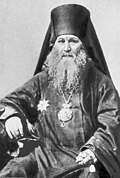 Gerasim DobroserdovSaint · Bishop of AstrakhanJun 10
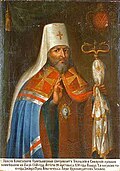 Paul of TobolskSaint · Metropolitan of TobolskJun 10
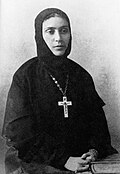 Schema-abbess Tamar MarjanishviliConfessor · Georgian schema-abbessJun 10
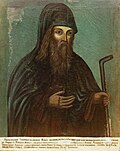 Dalmat of IsetskVenerable · Founder of Dalmatov MonasteryJun 10