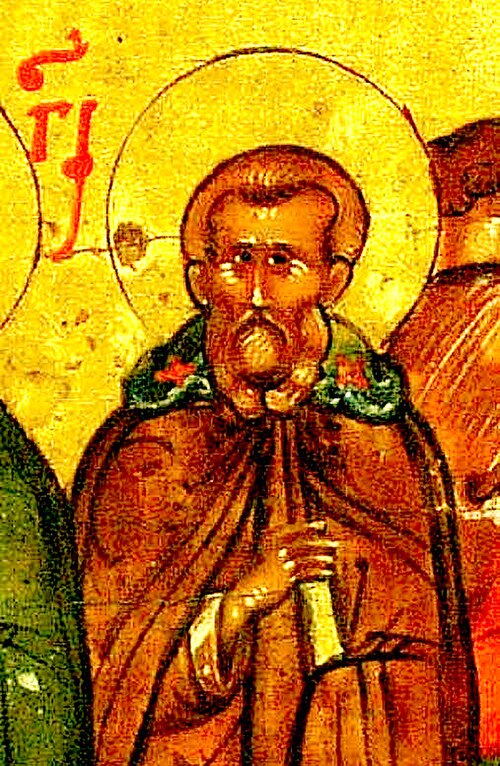
Venerable
Stephen the Sabaite
Hymnographer of Mar Saba
Monk from Gaza, nephew of John of Damascus and hymnographer, who spent fifty years at the Mar Saba monastery.
- Feast
- October 28old style November 10
- Reposed
- 8029th century
- Place
- Holy Lavra of Saint Sabbas
- Order
- Venerables
Life
Saint Stephen the Sabaite (725 - 794, 796, 802 or 807 according to sources), also called Stephen the Hymnographer or the Melodist, was a Christian monk from Julis, in the region of Gaza, a nephew of Saint John of Damascus and a hymnographer, who spent half a century at the monastery of Mar Saba. He is commemorated on 28 October (10 November by the new calendar), and according to the Greek source also on 13 July, which also appears in the Serbian source as his day.
Life
The sources disagree on the place of birth: the English and the Greek say Julis, in the region of Gaza, the Serbian Damascus, where he is said to have been the son of Theodore, brother of John of Damascus. The year of death is given between 794 (the Serbian source) and 807. Stephen led an ascetic life at the Lavra of Saint Sabas in Palestine. He was introduced to monasticism by his uncle and, at ten, entered the same monastic community as his uncle, Saint John of Damascus. Before twenty-five he felt so strongly drawn to seclusion and quiet that he asked the abbot of the community for permission to live as a hermit. Given the great skill in giving spiritual direction that he already showed, the abbot gave him limited permission, on condition that he be available to others at weekends, to give counsel to monks and visitors. The Serbian source says he lived for a time as an ascetic in the desert, where he wrote numerous church songs and hymns. Later he was chosen bishop, say the Greek and Serbian sources.
Toward the end of his life, Stephen reported that various cities, among them Gaza, his homeland, had been plundered and laid waste by the Saracens (as the Muslim caliphate was called, then under the Umayyad and Abbasid dynasties), which is recorded in the "Acta martyrum Sabaitarum". At that time many monks of the monastery of Saint Sabas were also killed. The events of the time are told in the writing of Leontius of Damascus, "The Life of Saint Stephen the Sabaite".
Work
Stephen and Andrew the Blind were among the first to compose hymns (idiomela) of the Triodion, the liturgical book used in Great Lent, sung between the Sunday of the Publican and the Pharisee and Palm Sunday. These idiomela are stichera, two for each weekday of Great Lent: one is sung at the aposticha of Vespers and one at the aposticha of Matins, each sung twice. The idiomela are, in a judgment cited, "exceptionally rich in doctrinal content, summing up the whole theology of the Great Fast".
In the past Stephen the Sabaite was often identified with the author called Stephen of Thebes, but the latter must have lived many centuries earlier. A small part of the saint's relics is at the Prousos monastery in Evrytania.
Commemorated the same day October 28
 Abgar of EdessaRight-Believing · King of EdessaOct 28
 Arsenije of SerbiaSaint · Archbishop of SerbiaOct 28
 Arsenios the CappadocianVenerable · Spiritual father from CappadociaOct 28
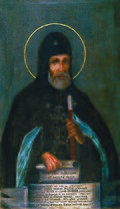 Job of PochaevVenerable · Abbot of PochaevOct 28
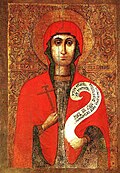 Paraskevi of IconiumGreat Martyr · Great Martyr, called FridayOct 28
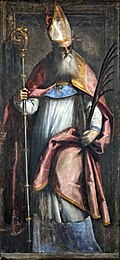 Judas CyriacusSaint · Bishop of JerusalemOct 28
- Arsenius AutorianusSaint · Patriarch of ConstantinopleOct 28
- FirmilianSaint · Bishop of Caesarea in CappadociaOct 28
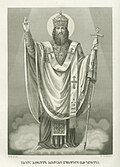 Neophytus of UrbnisiSaint · Bishop of UrbnisiOct 28
 Terence and NeonillaMartyrOct 28
- Theodora of WallachiaSaint · Tsaritsa of BulgariaOct 28
- Abraham of EphesusSaint · Archbishop of EphesusOct 28