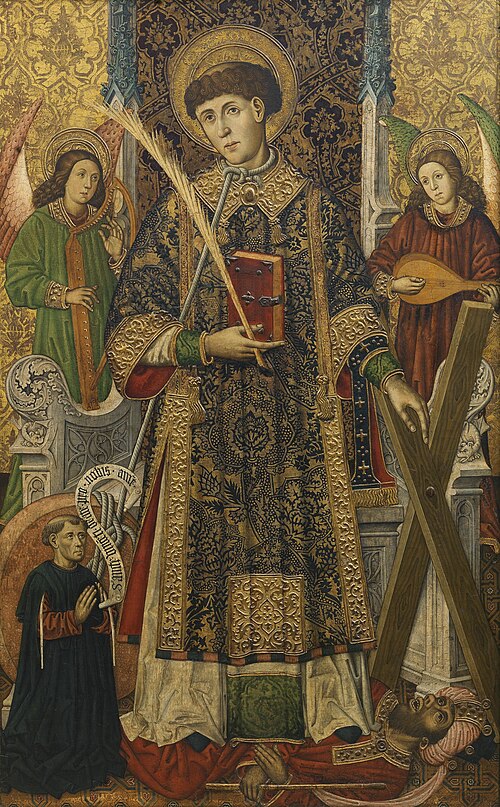
Martyr
Vincent of Saragossa
Deacon of Saragossa
Deacon of the Church of Saragossa, killed for his faith in the early fourth century, honored as first martyr of Spain.
- Feast
- November 11old style November 24
- Reposed
- 3044th century
- Place
- Valentia Edetanorum
- Order
- Martyrs
Life
Saint Vincent the deacon was a deacon of the Church of Zaragoza (Saragossa) and died a martyr in the persecution of Diocletian, around 304, at Valencia. He is honoured in Spain as its protomartyr and is patron of Lisbon, Valencia and the Algarve. The Orthodox Church commemorates him on 11 November, and the Western Church on 22 January. As a saint of the undivided Church he is honoured throughout Christendom.
Life
He was born at Huesca (Osca), near Zaragoza, in the second half of the third century. According to tradition his father was named Eutricius and his mother Enola. He grew up a disciple of Bishop Valerius of Zaragoza, who ordained him deacon. Valerius had a speech difficulty and entrusted Vincent with preaching the word in the church and throughout the region. According to the Greek Synaxarion, the bishop used to say that Vincent was his voice in the Church. The deacon spent his evenings teaching those newly come to the faith.
Martyrdom
When the emperors Diocletian and Maximian ordered the persecution of Christians, the governor Dacian had Valerius and Vincent seized and taken in chains to Valencia. They were imprisoned. At the trial the bishop let Vincent speak, and he said that they were ready to suffer anything for the faith. Dacian sent Valerius into exile and set out to break the deacon.
The old account of the poet Prudentius, written around 400, says that Vincent was stretched on the rack and his flesh torn with iron hooks. Then he was laid on a red-hot gridiron and his wounds were rubbed with salt. He remained so calm that his torturers seemed wearier than he. At last he was thrown into a dark prison, on a floor of broken pottery, where he gave up his soul around 304. It is told that the jailer saw a light and believed. Historians note that the story of the gridiron may have been borrowed from the martyrdom of Saint Lawrence, another son of Huesca, and that the Acts of Vincent are freely coloured by their compiler's imagination.
His body was thrown into a field to be torn apart by beasts, but according to tradition a raven protected it from birds of prey. It was then cast into the sea in a sack, but the waves carried it ashore and the Christians buried it.
Veneration
His cult spread very early in Spain, Gaul and Africa. Prudentius wrote a hymn to him in the Peristephanon, and Saint Augustine preached several sermons on him. His tomb at Valencia was the earliest centre of his cult. In one tradition his relics were taken to the cape in Portugal that bears his name, where, says the legend, ravens guarded the tomb. In 1173 King Afonso I of Portugal moved them to the cathedral of Lisbon, and a ship with two ravens appears on the city's coat of arms. His arm is kept in the cathedral of Valencia.
In icons he is shown as a deacon, in deacon's vestments, with a raven beside him.
Commemorated the same day November 11
 Martin of ToursSaint · Bishop of ToursNov 11
 Theodore the StuditeVenerable · Abbot of the Stoudios MonasteryNov 11
 Stefan Uroš III of DečaniRight-Believing · King of SerbiaNov 11
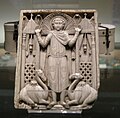 Menas of EgyptGreat MartyrNov 11
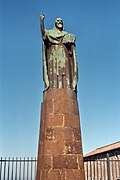 Bartholomew the YoungerVenerable · Abbot of GrottaferrataNov 11
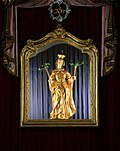 Corona (Stephanie)Martyr · Martyr of the 2nd centuryNov 11
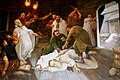 Five Holy Martyrs of PolandHoly Venerable Martyrs · Camaldolese hermit monksNov 11
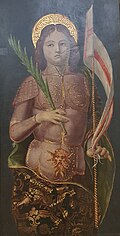 Victor of DamascusMartyr · Roman soldier of DamascusNov 11
 UrošicaVenerableNov 11
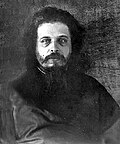 Eugene KobranovHieromartyr · Bishop of RostovNov 11
- Jeftimije of DečaniVenerable Martyr · Monk of DečaniNov 11
- AbibusSaintNov 11